26 September 2012

Agon's Paulson at the FIDE General Assembly

The link to the series of Youtube videos that I noted in 83rd FIDE Congress isn't the only video resource available for that gathering. It turns out that the same camera man, Sevan Muradian, has extracted some of the most important sequences to separate videos. For example, below is a clip covering Andrew Paulson's appearance in front of the General Assembly. If you're not familiar with Paulson, he's the white knight to whom FIDE has given the contract for the next few World Championship cycles. I covered his swift ascent to FIDE center stage in two recent posts: Evolution of a Press Release and C25 Candidates & C26 Grand Prix.


Agon (47:27) • 'Published on 19 Sep 2012 by North American Chess; no description available'

Although the clip is over 47 minutes long, Paulson's main presentation lasts for only three minutes near the beginning. Here's a highlight:-

I'm often asked by journalists, do I really think that I can make chess as big as it was 20 or 30 years ago, and I point out to them that chess is bigger than it was 20 or 30 years ago. It's simply that media attention -- the eye of the camera -- has been elsewhere. So in fact a major part of our strategy is to bring back media attention to the events themselves. It's not a major transformation. I don't have any revolutionary ideas. I simply plan on doing everything a little bit better and I think that's the core of our plan.

The rest of the video is a Q&A featuring various FIDE heavyweights, epsecially FIDE Deputy President Makropoulos. FIDE President Ilyumzhinov remains silent throughout. My favorite segment is an exchange between Paulson and Vice President Ilya Levitov, who also happens to be President of the Russian Chess Federation, on the withdrawal of the Chelyabinsk organizers from the first Grand Prix event, which was hastily reorganized in London. Another portion worth excerpting is Paulson's response when asked about 'media channels' at the London Grand Prix:-

The first two Grand Prix's, which were supposed to be in Chelyabinsk and Tashkent, we had no major plans for innovation. We signed the contract six months ago and there was still an amount of uncertainty around it. Our plans are to make a big, let's say, a transitional moment during the Candidates which will also be in London in March.

Toward the end of the video, Makropoulos explains the importance of the contract to FIDE:-

I'm proposing to approve this contract, because it's very important for FIDE at this moment. It's the first time in our history to have our events for the World Championship cycle, very expensive events; it's the first time in our history to have someone who can guarantee these events.

If you are also interested in the CNC presentation, which preceded the Agon time slot, see CNC, on the same Youtube channel.

19 September 2012

The Philippine Connection

While writing yesterday's post on my main blog, The Match That Never Was, I had a vague recollection of another fabricated Fischer - Karpov game from a few years ago. Sure enough, I found it on Chessbase.com and added the relevant links to the 'Never Was' post.

One unfabricated fact about the game didn't seem right: that the main negotiations between Fischer and Karpov occurred in the Philippines. The one reference by Chessbase -- Russians vs. Fischer, by Plisetsky and Voronkov (1994), p.366-367 -- mentions only meetings in Tokyo and Cordoba. Then I turned to Kasparov's volume on Fischer, My Great Predecessors IV, where starting on p.467, there is a long, detailed account titled 'Abdication'. Here is a timeline derived from that account.

1972-09•Reykjavik: Fischer wins title from Spassky
1972 •San Antonio: Fischer visits tournament; meets Karpov for first time
1973 •Manila: Fischer visits tournament; meets Marcos, Campomanes
1973-09•Helsinki: FIDE Congress, Fred Cramer presents Fischer's proposals
1974-06•Nice: FIDE Congress; Fischer resigns title
1974-11•Moscow: Karpov beats Korchnoi in Candidates final
1975-01•Philippines offers $5.000.000 for match
1975-03•Bergen-aan-Zee, Holland: Extraordinary FIDE Congress
1975-04•Euwe declares Karpov World Champion


1974(?)•Campomanes takes role of intermediary between Fischer & Karpov
1976-07•Tokyo: First negotiations
1976-08•Cordoba: Next meeting
1977-10•Washington: (1) restaurant, (2) Philippine embassy

There are some gaps in that table, especially months and venues, which I'll fill in from other accounts.

12 September 2012

Notable Resources

A few resources worth mentioning;-

I also created a new category for 'Resources'.

05 September 2012

C25 Candidates & C26 Grand Prix

Working on the previous post, Evolution of a Press Release, I realized that I didn't have a good grasp of the events leading to the forthcoming start of the Grand Prix in London. Following is a series of relevant articles from Chessvibes.com. I prefer Chessvibes over the other main chess news services because it incorporates visitor comments.

C25: Candidates

C26: Grand Prix

Given the many things that have gone wrong with world chess in the last decade, I'm not easily impressed by FIDE, but the accomplishments of the past six months are taking the organization in a new direction. If the London Grand Prix is even moderately successful, we can expect great things to follow.

29 August 2012

Evolution of a Press Release

While looking over material related to the FIDE cycle that starts with next month's Grand Prix -- see New Cycle, New Page for background -- I noticed that Chessbase.com published two different press releases for the same article, the second release replacing the first. The first release is still available elsewhere on the Web, so I thought it would be informative to compare the two versions.

The first column in the following table is a copy of the first release, published by Chessbase on 6 June 2012. The second column is a copy of the second release, published 2 July 2012.

Andrew Paulsen’s plans for chess [exd5.com, June 2012] Agon appoints Pentagram to reposition chess [chessbase.com, July 2012]

As we recently reported, FIDE has transferred the rights to its World Championship cycle to an American media entrepreneur. Now Andrew Paulson has founded a venture call World Chess, which will host the championships with a prize fund of 5.4 million Euros! World Chess estimates the potential global audience for the sport at more than one billion. Mission statement.

As we recently reported, American media entrepreneur Andrew Paulson has founded a venture to host the World Chess Championships – with a prize fund of 5.4 million Euros! He has now appointed a leading design agency, Pentagram (in London) to rebrand the championships, which will be broadcast live on iPads, smartphones and cable TV channels. Press release (revised).

Press release : Media entrepreneur buys exclusive commercial rights to World Chess

Chess-loving entrepreneur Andrew Paulson has bought the commercial rights to the World Chess Championships, in a bid to transform the 1,600 year-old sport into a global entertainment form.

Press release : Agon appoints Pentagram to reposition chess for the world stage

Leading design agency Pentagram has been hired to rebrand the World Chess Championships, after the World Chess Federation (FIDE) accorded the commercial rights to the sport to technology entrepreneur Andrew Paulson.


American entrepreneur Andrew Paulson [photo Ester Dyson, New York]

Paulson struck the exclusive deal with Kirsan Ilyumzhinov, president of the World Chess Federation (FIDE), to host the championships and provide long-term commercial structure for the game, with a prize fund of 5.4 million Euros. His new venture, called World Chess, plans to return the sport to the UK’s television screens for the first time since Nigel Short played Garry Kasparov for the top prize in 1993. Condensed highlights will be shown on living room television sets, supported by interactive broadcast on the internet, iPads and smartphones.

The move represents a huge sponsorship opportunity for brands, as the sport is so far a clean slate in terms of advertising. When IBM’s supercomputer Deep Blue beat Garry Kasparov in 1997, IBM said it received $500m of free publicity.

World Chess estimates the potential global audience for the sport at more than one billion, with over 600 million chess players worldwide. Its broadcast strategy will exploit the interactive potential of the Internet and mobile technology, allowing fans to post live match commentary, monitor players’ heartbeats, track their eye movements over the board, and predict the next move.

World Chess will also develop a range of apps that will allow fans to follow the games on all the major social media platforms. London-based design agency Pentagram, which has been hired to provide the branding for World Chess, has designed the purpose-built arena and cockpit for the matches.

Mr Paulson struck the deal with Kirsan Ilyumzhinov, president of FIDE, to host the championships and provide long-term commercial structure for the game, with an increased prize fund of 5.4 million euros.

AGON, the company set up to administer the commercial activities of World Chess, has briefed Pentagram to position the sport as a global entertainment form that encompasses the interactive potential of the internet and mobile technology.

Pentagram has designed the new auditorium for the next World Chess Championship cycle, which will start next March in London as part of the European Tour, before moving on to Lisbon, Madrid, Paris, Berlin and Istanbul.

The championship games will be broadcast live on the internet, on iPads and on smartphones. A range of apps will allow fans to follow the championships on all the major social media platforms. Mr Paulson is also negotiating with global cable television channels for highlights coverage on living room television sets.

The sport is so far a clean slate in terms of advertising, and Mr Paulson is looking for six brand partners to “professionalise and enliven” the sport.

He said: “World Chess will make household names of Grandmasters and provide a compelling media proposition for global companies to become sponsors. YouGov research has shown that chess is more associated with intelligence, sophistication and strategy than any other major global sport.”

Paulson, a serial media and technology entrepreneur, founded Aisha Publishing House and the $300m online media business SUP. His vision for World Chess was born following a chance meeting with Ilyumzhinov, the former leader of the oil-rich Buddhist region of Kalmykia, who was re-elected as president of FIDE in 2010. FIDE will supply the players and regulate the tournament, initially receiving 20 per cent of the prize money, with an additional profit-share agreement planned over the longer term.

World Chess has ample finance to fund the first cycle of the world chess championship, but it is expected that additional support will be secured from sponsors. The company is understood to be in talks with a number of businesses in the technology, media, financial and professional services sectors. Mr Paulson said: “We are looking for six global sponsors in non-competing sectors.

Research undertaken by YouGov has shown that chess is more associated with intelligence, sophistication and strategy than any other major global sport.”

Mr Paulson founded the Russian businesses Afisha Publishing House and the online media business SUP. His vision for the World Chess Championships was born following a chance meeting with Ilyumzhinov, the former leader of the Buddhist region of Kalmykia, who was re-elected as president of FIDE in 2010.

FIDE will supply the players and regulate the tournament, initially receiving 20 per cent of the prize money, with an additional profit-share agreement planned over the longer term.

The first fixture will be played in London in March 2013 followed by events in other major European cities. The tournament will be hosted by North African and Middle Eastern cities in 2014, followed by India in 2015 and the Americas in 2016. Each World Chess Championship cycle will take two years, working up to the Championship Match via the Candidates Tournament, six Grand Prix and one World Cup game, where the reigning World Champion will take on the leading contender.

Harriet Dennys, Mission PR

Each World Chess Championship cycle will take two years, working up to the Championship Match via the Candidates Tournament, six Grand Prix and one World Cup game, where the leading challenger will take on the reigning World Champion.

Following the European Tour-themed first year, the World Chess Championships will be hosted by cities in a different economic zone each succeeding year: the Arab world in 2014, India in 2015 and the Americas in 2016.

Harriet Dennys, Mission PR

The June press release shows lack of familiarity with professional chess ('the purpose-built arena and cockpit for the matches'; 'fixture' instead of 'tournament') and reveals some difference in the expectations of the two parties ('bought the commercial rights' vs. 'accorded the commercial rights'; 'exclusive deal' vs. 'deal'). The chess world has cut Paulson a lot of slack, hoping that maybe, just maybe, Ilyumzhinov has finally discovered a worthy commercial partner.

22 August 2012

History of the World Championship on Fide.com

The Official site of the match for the title of World Chess Champion, aka the 2012 Anand - Gelfand match, has a good summary of World Championship title events: Match History. Perhaps unique among 'official' lists, it includes both FIDE and non-FIDE matches, as well as the final rounds of the knockout events. The Anand - Gelfand match would be the 52nd on the list.

15 August 2012

Fortunate with His Temperament

Fischer (1943-2008), Filip (1928-2009), Smyslov (1921–2010), Larsen (1935–2010), now Gligoric (1923–2012); one by one the World Championship contenders of the mid-20th century are leaving us: Svetozar Gligoric, legend of the King's Indian, dies at 89, (Chessvibes.com, 14 August 2012).
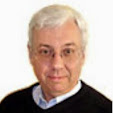
The first chapter of Gligoric's I Play against Pieces (Batsford 2002) is autobiographical, with several passages relating to his struggles for the World Championship. A sample:-

An episode from my 'comeback' in 1967: After the Interzonal in Portoroz 1958 I gave the impression of being one of favourites in the Candidates tournament 1959 of 8 participants, and I disappointed my audience when I finished 5th-6th in the company of a young grandmaster by name of Bobby Fischer... I continued my 'going down' in the Interzonals at Stockholm 1962 and Amsterdam 1964, failing twice to qualify for the Candidates stage. When I went to Sousse in 1967, nothing spectacular was to be expected from me.

At that time, I had some new ideas for a safe opening repertoire and intended, as usual, to rely on my intuition during play. My plan was not to lose a single game and to gain the minimum number of wins necessary for qualification -- and that I thought I could do.

I was 44 and it surprised me when my new second, young Velimirovic, treated me like a novice in international chess. He forced me to break my regular habits and to spend 2-3 hours each morning in preparation for the game in the afternoon. It was like a prophecy of how chess players behave nowadays, where preparation can offer a 90% guarantee of success.

Gligoric finished tied for 2nd-4th (+7-0=14) with Korchnoi and Geller (1967 Sousse Interzonal Tournament). The following year he played Tal in the first round of the Candidate matches.

My tactics were like balancing on the brink of a threatening abyss -- if I lost a single game. It did happen in my next match with Tal who, in 1968 said that for several reasons Belgrade as a playing site was a handicap to me. I was leading after five games and both Tal and his second Koblentz believed that I was going to win the match.

Then in the 6th game, stupidly irritated by journalistic comments on the 'monotony of our duel', I shocked myself with a sudden decision at the board to make a 3rd move as White for which I was unprepared. After that defeat I collapsed. If one could explain it -- I must have been tired of the situation with no tranquillity. Among other things, the playing hall was across the street from where I lived downtown with my wife and this was like an open invitation to benevolent visitors to frequent our place. However I was fortunate with my temperament and did not regret one bit my lost chance.

Not only was Gligoric a world class player, he was also a world class journalist and a world class arbiter. The man who declared himself to be 'fortunate with my temperament' is already in the books as one of the greatest.